


How to Choose the Right High-Pressure Hydraulic Filter
Choosing the correct high-pressure hydraulic filter is about more than finding a filter that fits the pipework. The filter must be suitable for the system pressure, handle the required hydraulic flow and provide the level of filtration needed to protect downstream components.
Whether you are replacing an existing hydraulic pressure filter or specifying filtration for a new system, understanding working pressure, flow rate, micron rating, filter media and connection size will help narrow down the correct specification.
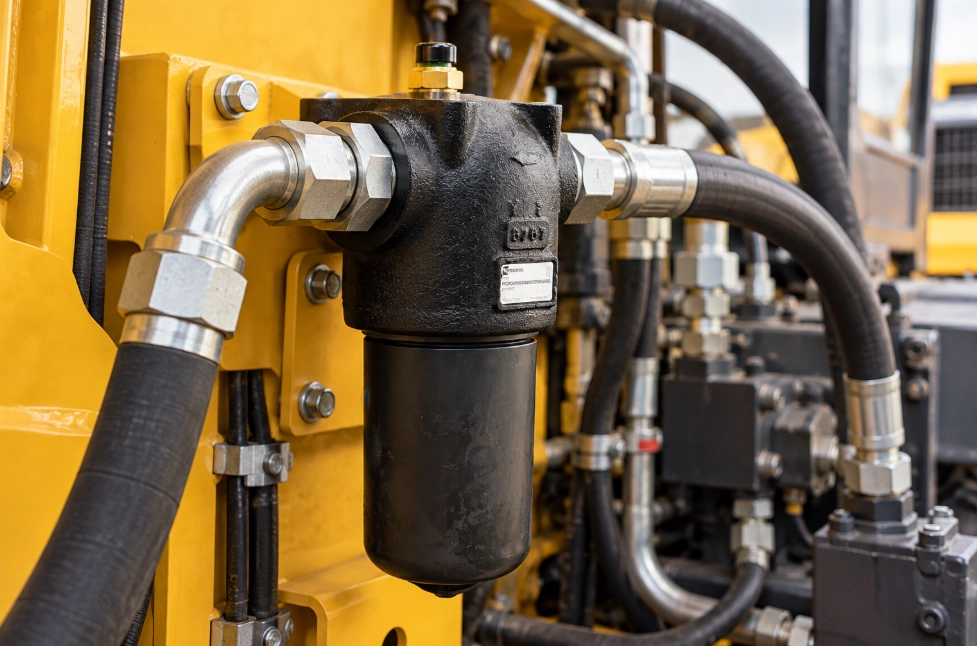
If you already know the specification you require, you can browse our high-pressure hydraulic filter range .
Quick answer
A high-pressure hydraulic filter removes contamination from pressurised hydraulic oil before it reaches sensitive downstream components. To choose the correct filter, start with the maximum working pressure and hydraulic flow rate, then check the required micron rating, filter media, port size, fluid compatibility and any clogging indicator or bypass requirements.
- 1) What is a high-pressure hydraulic filter?
- 2) How does a high-pressure hydraulic filter work?
- 3) How do I choose the right high-pressure hydraulic filter?
- 4) What pressure rating does my hydraulic filter need?
- 5) What micron rating do I need?
- 6) What flow rate should a high-pressure filter handle?
- 7) Where is a high-pressure hydraulic filter installed?
- 8) How do I know if a high-pressure hydraulic filter is blocked?
- 9) High-pressure hydraulic filter selection checklist
- 10) Frequently asked questions
1. What Is a High-Pressure Hydraulic Filter?
A high-pressure hydraulic filter is designed to remove contamination from hydraulic oil while operating on the pressurised side of a hydraulic system.
Dirt, metal particles and other contamination can circulate through hydraulic oil and contribute to wear in valves, motors, actuators and other hydraulic components. A high-pressure filter helps control this contamination before the oil reaches sensitive parts of the hydraulic circuit.
What makes a high-pressure filter different?
The filter housing is designed to withstand considerably higher operating pressure than filters intended for lower-pressure areas such as return lines. The correct pressure rating must always be checked before installation.
High pressure does not describe the filtration level
Pressure rating and filtration rating are separate specifications. A filter may be designed for high hydraulic pressure while being available with several different micron ratings and filter element options.
2. How Does a High-Pressure Hydraulic Filter Work?
A high-pressure hydraulic filter works by directing pressurised hydraulic oil through a filter element before the oil continues through the hydraulic circuit.
In a typical design, contaminated hydraulic oil enters the filter housing and flows around the outside of the filter element. The oil is then forced through the filter media, where contamination is captured, before the filtered oil passes into the centre core and leaves through the outlet.
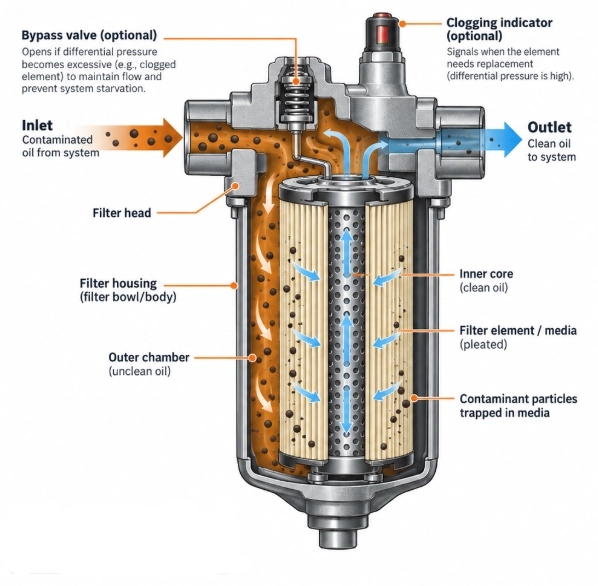
The Four Basic Stages of High-Pressure Hydraulic Filtration
The filtration process shown in the diagram can be broken down into four basic stages.
1. Contaminated oil enters
Contaminated hydraulic oil enters through the filter inlet and flows into the outer chamber surrounding the filter element.
2. Particles are trapped in the media
The oil passes through the pleated filter media. Contaminant particles are captured on and within the media while the hydraulic oil continues through it.
3. Clean oil passes to the centre core
Once the hydraulic oil has passed through the filter media, the cleaner oil flows towards the inner centre core of the filter element.
4. Clean oil exits
The filtered hydraulic oil flows through the centre of the element and leaves through the filter outlet before continuing to downstream hydraulic components.
High-pressure hydraulic filter flow in simple terms
Contaminated hydraulic oil enters → particles are trapped in the filter media → clean oil reaches the centre core → filtered hydraulic oil exits.
What Does the Filter Element Actually Remove?
The filter media is designed to capture solid contamination suspended in the hydraulic oil. This can include dirt, wear particles and other debris circulating through the hydraulic system.
As contamination is captured, it remains within or on the surface of the high-pressure hydraulic filter element while the filtered hydraulic oil continues through the circuit.
Flow direction can vary between filter designs
The diagram shows a typical outside-to-inside filtration arrangement. Different filter designs may use a different internal flow path, so always follow the flow direction specified by the filter manufacturer.
3. How Do I Choose the Right High-Pressure Hydraulic Filter?
Start by establishing the operating conditions of the hydraulic system. The correct high-pressure hydraulic filter needs to match several specifications rather than one figure alone.
Working pressure
Check the maximum hydraulic pressure the filter may experience during operation.
Flow rate
Confirm the maximum amount of hydraulic oil that needs to pass through the filter.
Micron rating
Establish the filtration level required to protect the hydraulic components in the system.
Connections
Check hydraulic port size, thread type and the physical installation requirements.
Other considerations can include filter media, hydraulic fluid compatibility, dirt-holding capacity, pressure drop, clogging indicators and bypass arrangements.
Do not select from pressure rating alone
A 350 bar high-pressure filter is not automatically suitable for every 350 bar hydraulic system. Its flow capacity, filtration performance, connections and element specification must also match the application.
4. What Pressure Rating Does My High-Pressure Hydraulic Filter Need?
The pressure rating of the filter housing must be suitable for the conditions it can experience within the hydraulic circuit.
When replacing an existing hydraulic pressure filter, do not assume the normal operating pressure is the only figure that matters. Maximum system pressure and pressure peaks may also need to be considered.
| Pressure information | Why it matters |
|---|---|
| Normal working pressure | Shows the pressure the high-pressure filter will normally experience during operation. |
| Maximum system pressure | Helps establish the highest expected hydraulic pressure within the circuit. |
| Pressure peaks | Some hydraulic circuits can experience short-duration pressure changes during operation. |
| Filter housing rating | Must be appropriate for the intended position and pressure conditions within the system. |
Replacing an existing high-pressure filter?
Record the manufacturer and filter reference where possible. This can make it easier to identify the original pressure rating, element specification and connection details.
Find a High-Pressure Hydraulic Filter for Your Application
Once you know the pressure, flow rate and filtration requirements, you can begin comparing suitable high-pressure hydraulic filters.
High-pressure hydraulic filters
Browse pressure filters designed for installation within high-pressure hydraulic circuits.
Hydraulic filtration
Explore Flowfit's wider hydraulic filtration range for other filtration requirements.
Not sure which high-pressure filter you need?
If you know your working pressure, maximum flow rate, required micron rating and connection size, the Flowfit team can help identify suitable high-pressure filter options.
5. What Micron Rating Do I Need for a High-Pressure Hydraulic Filter?
The micron rating describes the particle size associated with the filtration performance of the hydraulic filter element.
The required micron rating depends on the hydraulic components being protected and the cleanliness requirements of the system. More contamination-sensitive components may require finer filtration than less sensitive applications.
| Consideration | Why it matters |
|---|---|
| Component requirements | Valves, motors and other components may have recommended fluid cleanliness requirements. |
| Micron rating | Helps identify the filtration level provided by the high-pressure filter element. |
| Filter efficiency | Two filters with the same stated micron size may not necessarily provide identical filtration performance. |
| Pressure drop | Finer filtration can influence resistance to oil flow and should be considered during filter sizing. |
The smallest micron rating is not automatically the best choice
High-pressure filter selection should balance the required oil cleanliness with hydraulic flow, pressure drop, filter capacity and the requirements of the components being protected.
6. What Flow Rate Should a High-Pressure Hydraulic Filter Handle?
A high-pressure hydraulic filter must be able to handle the amount of hydraulic oil passing through that part of the circuit.
Hydraulic flow is normally expressed in litres per minute. When choosing a high-pressure filter, compare the required system flow with the manufacturer's flow information for the filter housing and element.
Pressure rating and flow rating are different
Pressure rating tells you about the pressure the filter housing is designed to withstand. Flow capacity relates to how much hydraulic oil can pass through the filter under the specified operating conditions.
Why Does Pressure Drop Matter?
Hydraulic oil experiences resistance as it flows through a filter element. This creates a pressure difference between the inlet and outlet of the filter, often referred to as pressure drop or differential pressure.
Oil viscosity, flow rate, filter element condition and filtration level can all influence pressure drop. This is one reason a high-pressure hydraulic filter should not be selected from port size alone.
Consider cold-start conditions
Hydraulic oil generally becomes more viscous at lower temperatures. Increased viscosity can create additional resistance through the filter, so operating temperature and oil viscosity may need to be considered during filter selection.
7. Where Is a High-Pressure Hydraulic Filter Installed?
A high-pressure hydraulic filter is typically installed within the pressure side of a hydraulic circuit where filtered oil is required before it reaches downstream components.
The exact location depends on the design of the hydraulic circuit and which components require protection.
Before hydraulic valves
Pressure filtration can help limit contamination reaching valves with relatively small internal clearances.
Before hydraulic motors
A high-pressure filter may be used to provide filtered oil to downstream hydraulic motors.
Protecting sensitive components
Pressure-line filtration can be useful where particular components require a controlled level of oil cleanliness.
Complete filtration systems
High-pressure filtration may be used alongside return, suction or other filtration depending on the design of the hydraulic system.
Think about the complete hydraulic circuit
The correct position for a filter depends on the pump, valves, actuators, operating pressure, contamination risks and cleanliness requirements of the complete hydraulic system.
8. How Do I Know if a High-Pressure Hydraulic Filter Is Blocked?
As a high-pressure hydraulic filter element captures contamination, the restriction through the element can gradually increase.
Some high-pressure filter assemblies use visual or electrical clogging indicators to help show when the differential pressure across the filter has reached a specified level.
| Possible sign | What it may indicate |
|---|---|
| Clogging indicator activated | The differential pressure across the high-pressure filter element may have increased. |
| Increasing pressure differential | Contamination may be creating additional restriction through the filter element. |
| Reduced hydraulic performance | Restriction may be one possible cause, although the complete hydraulic system should be checked. |
| Service interval reached | The filter element may be due for inspection or replacement according to the maintenance schedule. |
When Should a High-Pressure Hydraulic Filter Element Be Replaced?
There is no single replacement interval suitable for every hydraulic system. Element life depends on contamination levels, operating conditions, filter capacity, duty cycle and the maintenance requirements of the equipment.
Do not ignore a clogging indicator
If a high-pressure filter indicator shows that servicing is required, inspect the filter and follow the appropriate maintenance procedure rather than continuing to operate indefinitely.
9. What Information Do I Need Before Choosing a High-Pressure Hydraulic Filter?
Gathering the information below before comparing high-pressure filters makes selection considerably easier.
| Information to collect | Why it is needed |
|---|---|
| Maximum working pressure | Helps identify a high-pressure filter housing with a suitable pressure rating. |
| Maximum hydraulic flow | Allows the required filter size and flow capacity to be considered. |
| Required micron rating | Helps determine the level of hydraulic filtration required. |
| Filter media | Different element materials can provide different filtration characteristics. |
| Hydraulic fluid | Allows filter media and seal compatibility to be checked. |
| Port size and thread | Ensures the high-pressure filter can be correctly connected to the hydraulic circuit. |
| Clogging indicator | Determines whether visual or electrical indication is required. |
| Existing filter reference | Can help when identifying a suitable replacement filter or filter element. |
1. Confirm pressure
Establish the maximum pressure the high-pressure filter may experience.
2. Confirm flow rate
Determine the maximum hydraulic flow through the filter.
3. Select filtration
Identify the required micron rating and filtration performance.
4. Check everything else
Confirm ports, filter media, fluid compatibility, indicators and installation requirements.
10. High-Pressure Hydraulic Filter FAQs
Can I use a return filter as a high-pressure hydraulic filter?
A hydraulic filter should only be used within the pressure conditions for which it has been designed. A return-line filter should not automatically be used in a high-pressure hydraulic line.
Does a high-pressure hydraulic filter reduce pressure?
Hydraulic oil experiences resistance as it passes through the filter element, creating a pressure differential across the filter. Correct filter sizing helps keep this resistance appropriate for the hydraulic system.
Is a lower micron hydraulic filter always better?
No. The micron rating should match the cleanliness requirements of the hydraulic system. Finer filtration can also affect pressure drop and filter capacity, so these factors need to be considered together.
How often should a high-pressure hydraulic filter element be changed?
Replacement frequency depends on contamination levels, operating conditions, filter capacity, duty cycle and any clogging indication provided by the high-pressure filter.
Can I replace a high-pressure filter with one that has the same port size?
Port size alone is not enough to confirm compatibility. Check pressure rating, flow capacity, micron rating, filter element specification, thread type, fluid compatibility and overall installation dimensions.
What information should I provide Flowfit when looking for a replacement filter?
Provide the existing filter or filter element reference where possible, together with the maximum pressure, hydraulic flow rate, micron rating, connection size and hydraulic fluid details.
Choosing the Right High-Pressure Hydraulic Filter
The correct high-pressure hydraulic filter needs to provide the required level of contamination control while matching the pressure, flow and connection requirements of the hydraulic system.
Before ordering, confirm:
- The maximum hydraulic working pressure
- The maximum hydraulic flow rate
- The required micron rating
- The required filtration performance
- The filter element media
- The hydraulic fluid being used
- The port sizes and thread types
- Any clogging indicator requirements
- Any bypass or valve requirements
- The available installation space
Find the Right High-Pressure Hydraulic Filter
Explore Flowfit's range of high-pressure hydraulic filters and compare pressure ratings, flow capacities and filtration options, or contact our team if you need help identifying the correct specification.
Tip: If you are replacing an existing high-pressure hydraulic filter, have the filter reference, pressure rating, flow rate, micron rating and connection details available when contacting the Flowfit technical sales team.
The total one-stop supplier for hydraulic components & systems
Get in touch

Parys Road
Ludlow
Shropshire
SY8 1XY


