


Working Out The CC Measurement Of A Hydraulic Gear Pump
How to Measure Hydraulic Gear Pump CC (Displacement per Revolution)
When selecting or replacing a hydraulic gear pump, it’s important to know the pump’s CC (displacement). CC tells you how much hydraulic fluid the pump moves per revolution, which helps you size the system correctly and avoid performance issues.
What does “CC” mean on a hydraulic gear pump?
CC stands for cubic centimetres and is used to describe the theoretical displacement per revolution of a hydraulic gear pump (often written as cc/rev).
Quick definition
Gear pump displacement (cc/rev) = the volume of fluid transferred from inlet to outlet in one full rotation.
How to measure gear pump CC (theoretical displacement)
You can estimate the theoretical cubic centimetre displacement per revolution by measuring key internal dimensions of the pump. For accuracy, ensure all measurements are taken carefully and in centimetres (cm).
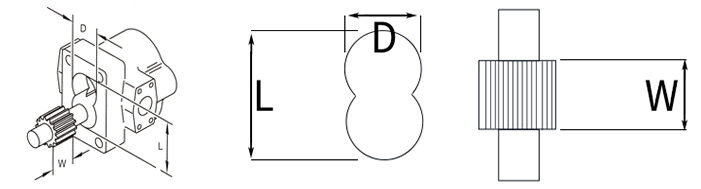
What the measurements mean
- W = Gear width
- D = Gear bore diameter
- L = Bore-to-bore / centre distance
Why do you need the CC measurement?
Hydraulic gear pumps are positive displacement pumps, which means they move a consistent volume of fluid for each revolution (in theory). Knowing the pump’s displacement helps you estimate flow and ensure your system operates smoothly.
As the gears rotate, they separate on the inlet side, creating a void that draws fluid in. The fluid is carried around the outside of the gears to the outlet side, where the meshing gears force the fluid out under pressure.
Why it matters in real systems
If displacement is incorrect, you can end up with poor performance, overheating, slow operation, or pressure problems — all of which can lead to downtime and costly repairs.
Need a gear pump or help matching CC?
Flowfit stocks a wide range of hydraulic gear pumps and pump accessories.
For advice, call 01584 876 033 or email sales@flowfitonline.com.
The total one-stop supplier for hydraulic components & systems
Get in touch

Parys Road
Ludlow
Shropshire
SY8 1XY


