


Understanding the Function and Benefits of Solenoid Spool Diverter Valves
A solenoid spool diverter valve uses an electrically controlled solenoid to shift an internal spool, directing hydraulic flow to different circuits. It’s a simple, reliable way to switch between functions in mobile and industrial hydraulics.
How does a solenoid spool diverter valve work?
A solenoid spool diverter valve works by using an electromagnetic solenoid to shift a spool inside the valve body, directing hydraulic fluid to different pathways within a hydraulic system.
Here’s a breakdown of how it operates:
-
Solenoid activation
When an electrical current is applied to the solenoid, it creates a magnetic field, causing the solenoid to push or pull the valve spool. -
Spool movement
The spool moves into different positions based on the solenoid’s action. The spool is machined with channels/grooves that control hydraulic flow. -
Fluid direction
Depending on spool position, hydraulic fluid is diverted to specific ports—feeding different parts of the circuit or returning to tank. -
Return to neutral
When the solenoid is de-energised, springs or other mechanisms return the spool to neutral, stopping or redirecting flow as required.
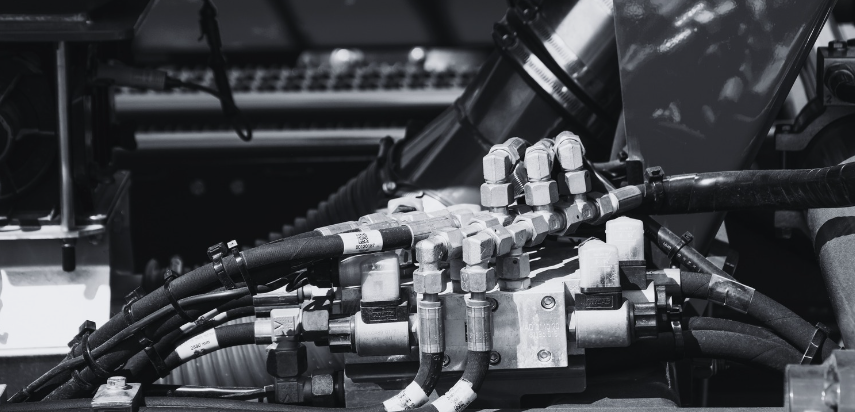
Benefits of using a solenoid spool diverter valve
The main benefits of using a solenoid spool diverter valve in hydraulic systems include:
- Automated control — can be operated remotely for faster, more responsive systems.
- Precise flow direction — accurate routing of flow for controlled actuator movement.
- Quick actuation — rapid switching between functions when cycle time matters.
Quick selection tip
Match the valve to your required flow, system pressure, and voltage (AC/DC). Undersizing the valve is a common cause of slow function speed and excess heat.
Typical applications for solenoid spool diverter valves
Solenoid spool diverter valves are used across many industries, including:
- Hydraulic machinery — excavators, loaders, agricultural equipment.
- Material handling — forklifts, cranes, pallet lifters (lifting and positioning control).
- Aerospace and aviation — landing gear systems, hydraulic actuators, flight controls.
- Presses and moulding machines — injection moulding, stamping, forming (high-precision control).
- Marine applications — steering, stabilisers, hydraulic winches.
Can solenoid spool diverter valves be used for both AC and DC power sources?
Yes—solenoid spool diverter valves can be used with both AC and DC power sources. The key requirement is that the valve is fitted with a solenoid coil compatible with your voltage and power type.
AC and DC coils behave differently (for example response and power consumption), so selecting the correct coil is essential for dependable operation.
How to increase the flow rate through a solenoid valve
Increasing flow rate can improve system speed and efficiency. Here are several practical methods:
- Select a valve with a larger orifice / higher flow rating — ensure the valve is sized for your required LPM.
- Adjust system pressure — increasing supply pressure can boost flow (only if all components are rated appropriately).
- Minimise resistance in the pipework — reduce bends, restrictions, and undersized hoses/fittings.
- Optimise fluid viscosity — use a fluid grade suitable for operating temperature; overly thick oil reduces flow.
- Install with correct orientation — follow manufacturer installation guidance to avoid performance losses.
- Maintain the system — keep the valve and circuit clean; contamination can restrict internal passages.
- Use multiple valves in parallel — where one valve can’t supply required flow, parallel valves can increase total capacity.
Can a solenoid valve be partially open?
It depends on the design. Standard solenoid valves are typically on/off. However, modulating (proportional) solenoid valves can be partially open, allowing finer control over flow and pressure.
Do solenoid valves have a manual override?
Many solenoid valves include a manual override. This allows the valve to be operated without electrical power, which can be useful during maintenance or in a power failure scenario.
Can a solenoid valve control pressure?
Solenoid valves primarily control flow. By affecting flow rate, they can indirectly influence pressure, but they don’t typically replace dedicated pressure control components.
For true pressure regulation, solenoid valves are often used alongside relief valves, pressure reducing valves, or proportional pressure control valves as part of a complete circuit.
Achieve optimal flow control with Flowfit solenoid diverter valves
At Flowfit, we supply a wide range of solenoid diverter valves to suit different applications, flow rates, and electrical setups.
- Flowfit solenoid diverter valves — options in both AC and DC voltages, including 3-way and 6-way spool valves.
- Walvoil solenoid diverter valves — DC voltage options including 2-way, 3-way, and 6-way spool valves, featuring a galvanised coating.
Need a diverter valve for your hydraulic system?
Browse solenoid spool diverter valves or explore the Walvoil range. If you’re unsure what you need, contact Flowfit for expert advice.
The total one-stop supplier for hydraulic components & systems
Get in touch

Parys Road
Ludlow
Shropshire
SY8 1XY


