


Solving Uneven Flow Distribution with Hydraulic Geared Flow Dividers
A hydraulic geared flow divider is a proven way to split hydraulic flow evenly (or in a fixed ratio) to help synchronise multiple cylinders or motors. In this guide, we explain how geared flow dividers work, where they’re used, and how to select the right model for your system.
In one sentence
Geared flow dividers use intermeshing gears to move equal volumes of fluid to multiple outlets—helping actuators run together even under uneven loads.
What is a hydraulic geared flow divider?
A hydraulic geared flow divider is a mechanical device used to divide and distribute hydraulic fluid between multiple circuits or actuators. Inside the unit, intermeshing gears rotate as fluid flows through, helping deliver equal (or proportional) flow to each outlet. This supports synchronised movement of multiple cylinders, motors, or other actuators—even when loads differ.
How do hydraulic geared flow dividers work?
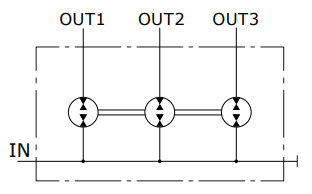
Fluid entering the divider drives the gears to rotate. Each gear section is housed in its own chamber and displaces a consistent volume of oil per revolution. Because the gear sections are mechanically linked, the unit delivers balanced flow to each outlet—helping maintain a steady ratio of output flow despite changes in pressure or load across connected actuators.
Example
Example of a 3-section geared flow divider.
What are the benefits of using a hydraulic geared flow divider?
Geared flow dividers are popular because they provide predictable, repeatable flow splitting without complex electronics or control loops. Key benefits include:
- Balanced flow distribution to multiple outputs for synchronised movement
- Improved consistency when loads vary across actuators
- Reduced need for complex controls in many multi-actuator systems
- Better overall efficiency when flow needs to be shared accurately

In what applications are hydraulic geared flow dividers commonly used?
Geared flow dividers are used anywhere you need multiple actuators to move together or receive balanced flow, including:
- Agricultural machinery: Even distribution of hydraulic power across machine functions
- Material handling equipment: Synchronising cylinders on forklifts, cranes, and lifting systems
- Industrial automation: Coordinating actuators in production and handling lines
- Construction machinery: Controlling attachments and multi-cylinder movements
- Log splitters and presses: Splitting flow for smoother multi-cylinder operation

How do I select the right hydraulic geared flow divider for my system?
Selecting the right geared flow divider comes down to matching performance and system requirements:
- Flow requirement: Confirm the total flow rate and the required flow per outlet—ensure the divider can handle your maximum flow.
- Pressure ratings: Choose a unit rated at or above your system operating pressure (and consider spikes/peaks).
- Type of actuators: Consider whether you’re synchronising cylinders or motors, and the control behaviour you need.
Tip
If you need a fixed ratio split (e.g., 70/30), choose a model designed for that ratio rather than a simple equal split.
Can hydraulic geared flow dividers handle different flow rates?
Yes—geared flow dividers can operate across a range of flow rates, but performance depends on selecting a model that matches your expected operating window. Always operate within the manufacturer’s specified flow and pressure limits to maintain accuracy and reliability.
What is the difference between a hydraulic flow divider and a hydraulic splitter?
The terms are sometimes used interchangeably, but the key distinction is whether the device maintains a controlled ratio:
- Hydraulic flow divider: Designed to split flow while maintaining a specific ratio to each outlet, even if pressures/load vary.
- Hydraulic splitter: Often refers to a simpler split that may not maintain an accurate ratio under changing conditions.
Flow ratio example
A 70/30 flow divider sends 70% of incoming flow to one outlet and 30% to another—useful when different circuits require different speeds.
How do hydraulic geared flow dividers help balance multiple cylinders?
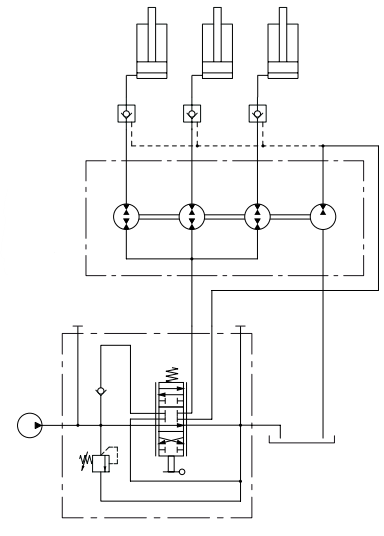
Geared flow dividers balance multiple cylinders by distributing flow evenly (or at a fixed ratio), compensating for load differences and helping keep actuator movement synchronised. This improves consistency, reliability, and safety where multiple cylinders must move together.
Example
Flow equaliser example for single-acting cylinders operation.
Can hydraulic geared flow dividers be combined with other hydraulic components like valves and pumps?
Yes. Geared flow dividers are commonly used alongside pumps, directional valves, flow control valves, and pressure control valves to create stable, efficient multi-actuator circuits.
How many sections should a geared flow divider have for my needs?
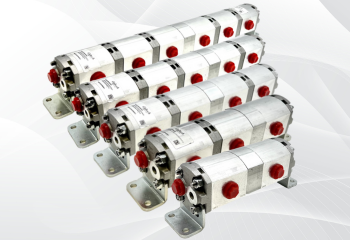
The number of sections depends on how many actuators you need to feed, their individual flow requirements, and the overall circuit design. More actuators usually means more sections—just ensure the divider is sized correctly for total flow and pressure.
Why Buy Hydraulics from Flowfit?
Premium Quality: We supply geared flow dividers made from top-grade materials for long-lasting performance.
Browse our selection of geared flow dividers and find the ideal solution for your system.
For more information, get in touch with our hydraulic specialists today.
The total one-stop supplier for hydraulic components & systems
Get in touch

Parys Road
Ludlow
Shropshire
SY8 1XY


