


Hydraulic Pipe Clamps Explained: Types, Materials, Sizing & Installation
Hydraulic pipe (tube) clamps secure hoses and tubes, reduce vibration, and protect hydraulic lines in demanding environments. Here’s how to choose the right clamp for your system.
Quick takeaway
Choose clamps by tube OD, environment, and vibration level. For high-pressure/mobility, use heavy-duty or metal options and follow DIN 3015 sizing.
What Are Hydraulic Pipe Clamps Used For?
Hydraulic pipe clamps (also called hydraulic tube clamps) are used to secure, support, and stabilise pipes, hoses, and tubes that carry fluid in hydraulic systems. They help prevent line movement, reduce wear, and minimise vibration—especially in high-pressure or mobile applications like plant machinery, agricultural equipment, manufacturing, and industrial hydraulics.
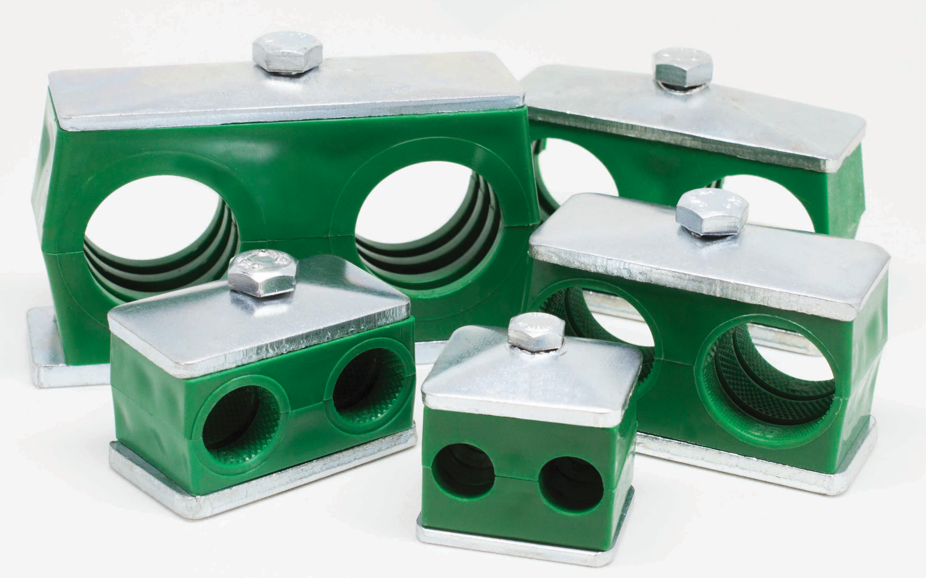
Types of Hydraulic Pipe Clamps
1) Light-Duty Clamps
- Materials: polypropylene (PP) or polyamide / nylon (PA)
- Best for: low–medium duty lines and general installations
- Benefits: cost-effective, easy to install, good vibration damping
2) Heavy-Duty Clamps
- Materials: reinforced polymers, aluminium bodies, steel hardware, optional inserts
- Best for: high vibration, mobile equipment, heavier line loads
- Benefits: durable, stronger retention, designed for higher stresses
3) Twin (Double) Clamps
- Materials: polymer or metal variants
- Best for: securing two parallel tubes/hoses together
- Benefits: tidy routing, symmetry, space-saving installs
4) Mounting Styles
- Common formats: weld plate, rail mount, stacking plates, base plates
- Choose based on: available space, load, and routing direction
What Materials Are Hydraulic Pipe Clamps Made From?
Polymer / Plastic (Low to Medium Duty)
- Polypropylene (PP): commonly green; good chemical resistance and cost-effective.
- Polyamide / Nylon (PA): commonly black; tougher than PP and better for higher temperatures and UV exposure.
- TPE / Rubber inserts: used for vibration and noise damping; helps protect the tube from abrasion.
Metal (Medium to Heavy Duty / Harsh Environments)
- Aluminium: strong, corrosion-resistant, great for heat and vibration.
- Carbon steel: very strong; often coated (e.g., zinc plated) to resist corrosion.
- Stainless steel (304/316): best for marine, chemical or corrosive environments.
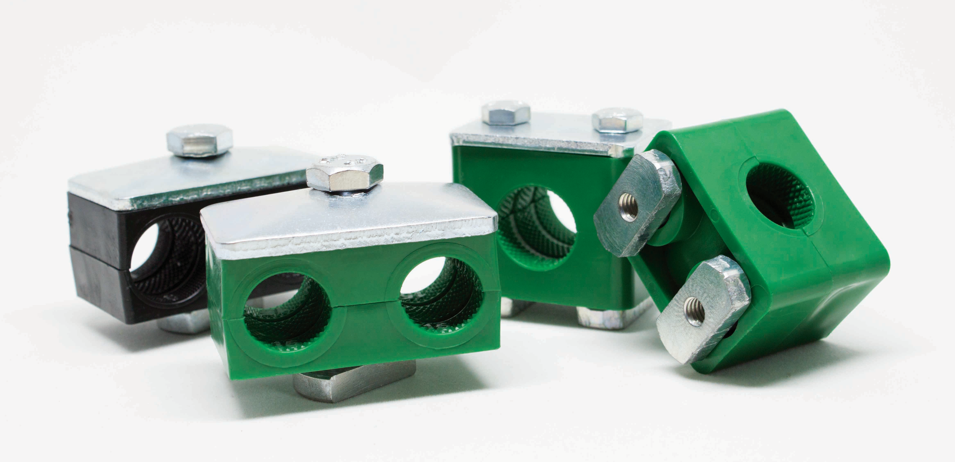
⚙ Choosing materials quickly
Use PP/PA for most standard hydraulic routing. Upgrade to metal clamps where vibration, temperature, corrosion or line weight is higher.
How Do I Size a Hydraulic Pipe Clamp?
Clamp sizing is mainly about matching the clamp to the outer diameter (OD) of your tube or hose, while also considering vibration and environment.
1) Measure Tube/Hose Outer Diameter (OD)
- Measure the outside diameter at the clamp location using callipers where possible.
- Choose a clamp size that fits snugly without crushing the tube or allowing movement.
2) Consider Load, Vibration & Line Weight
- Heavier lines and mobile equipment typically need heavy-duty clamps.
- Use inserts where vibration/noise reduction is important.
- Consider spacing: closer clamp spacing reduces line movement and fatigue.
3) Choose Single vs Twin Clamps
- Use twin clamps for neat parallel routing and improved stability.
4) Check Environment
- Outdoor/UV exposure: consider PA (nylon) or metal.
- Corrosive areas: stainless steel is often best.
Compatibility & High-Pressure Use
Hydraulic pipe clamps are broadly compatible with most systems, but correct selection depends on pressure, temperature, vibration, material, and the operating environment.
For high-pressure and high-vibration applications, choose clamps designed for heavier loads and consider metal bodies or reinforced designs where appropriate.
How to Install Hydraulic Pipe Clamps
- Plan routing: ensure lines are aligned and supported with appropriate spacing.
- Select the correct clamp: match OD, duty type, and environment.
- Position the clamp: place the tube in the clamp halves without twisting the line.
- Install mounting hardware: base plate/rail/stacking plate as required.
- Tighten evenly: torque fasteners evenly to avoid uneven clamping and line distortion.
- Check clearance: confirm no chafe points, sharp edges, or contact with moving parts.
- Test the system: run the system and inspect for line movement, rubbing, or loosening.
Tip for long service life
Keep clamps away from heat sources and allow a little slack for movement/expansion on mobile equipment. Inspect after initial run-in to confirm nothing has settled or loosened.
FAQ
Do hydraulic pipe clamps need maintenance?
Yes. Periodically check fasteners, inspect for cracks or deformation, and confirm the line hasn’t started rubbing. High-vibration equipment should be checked more often.
Can hydraulic pipe clamps be reused?
Often yes—provided the clamp body, inserts, and hardware are undamaged and the clamp still holds securely. Replace any worn inserts or corroded fasteners.
Are there standards for hydraulic pipe clamps?
A common standard is DIN 3015, which provides design and dimensional guidance for pipe/tube clamp systems.
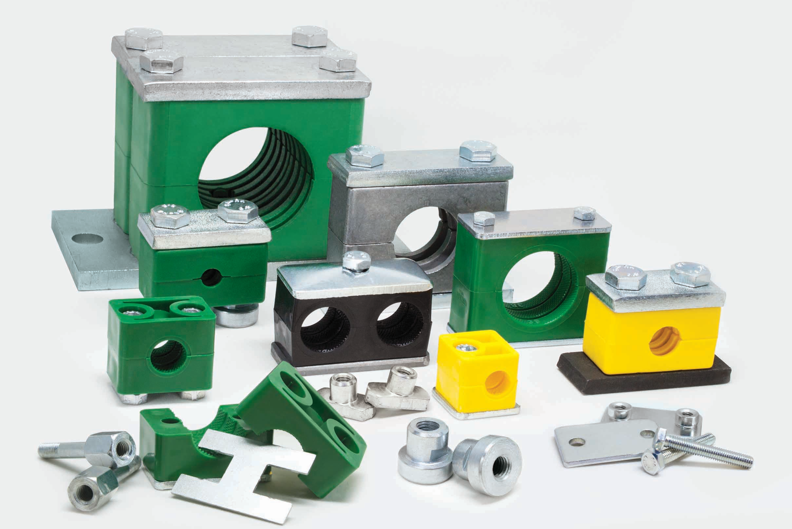
Need hydraulic pipe clamps?
Browse our range of hydraulic pipe clamps in multiple sizes and materials to suit your specification. If you’re unsure what you need, contact Flowfit for expert advice.


