


Hydraulic Oil Explained: Top 10 Questions Answered
Choosing the right hydraulic oil is essential for keeping hydraulic machinery running smoothly, efficiently, and reliably. Hydraulic oil does more than transmit power. It also lubricates moving parts, helps control heat, protects against wear, and reduces the risk of rust and corrosion.
In this guide, we explain what hydraulic oil does, what ISO VG grades mean, how to choose the correct oil for your equipment, and when hydraulic oil should be changed. You can also browse Flowfit’s range of Exol premium hydraulic oil online.
Quick answer
Hydraulic oil should be chosen based on the machine manufacturer’s recommendation, the correct ISO VG viscosity grade, operating temperature, system pressure, and duty cycle. Common grades include ISO VG 32, ISO VG 46, and ISO VG 68.
Need hydraulic oil for your equipment?
Flowfit supplies Exol premium hydraulic oil for hydraulic systems used across industrial, agricultural, construction, workshop, and mobile machinery applications.
- 1) What hydraulic oil is and why it matters
- 2) Main types of hydraulic oil
- 3) What ISO VG 32, 46 and 68 mean
- 4) How to choose the right hydraulic oil
- 5) Properties of good hydraulic oil
- 6) How often hydraulic oil should be changed
- 7) Signs of contaminated or degraded hydraulic oil
- 8) Can different hydraulic oils be mixed?
- 9) Problems caused by the wrong hydraulic oil
- 10) Safe storage and disposal
- 11) Why buy hydraulic oil from Flowfit?
1. What Is Hydraulic Oil and Why Is It Important?
Hydraulic oil is a specially formulated fluid used to transmit power through a hydraulic system. When hydraulic oil is pressurised, it transfers force to components such as pumps, cylinders, motors, and valves.
It also performs several other important jobs. Hydraulic oil helps lubricate moving parts, reduce friction, control heat, protect metal surfaces, prevent corrosion, and carry contamination back to the filter. Without the correct oil, hydraulic machinery can become inefficient, noisy, unreliable, or more likely to fail.
In simple terms
Hydraulic oil is the working fluid that allows a hydraulic system to generate movement, carry load, and protect internal components.
2. What Are the Main Types of Hydraulic Oil?
Hydraulic oils are available in different formulations depending on the application, temperature range, environmental requirements, and level of protection needed.
- Mineral-based hydraulic oil
This is the most common type of hydraulic oil. It is widely used because it offers good performance, availability, and value for general hydraulic applications. - Synthetic hydraulic oil
Synthetic oils are engineered for more demanding operating conditions, such as extreme temperatures, heavy-duty cycles, or applications where longer oil life is required. - Biodegradable hydraulic oil
Biodegradable hydraulic oils are used where environmental protection is especially important, such as agriculture, forestry, marine work, or sensitive outdoor locations.
3. What Does ISO VG Mean in Hydraulic Oil?
ISO VG stands for International Standards Organisation Viscosity Grade. It describes the thickness of the hydraulic oil at 40°C.
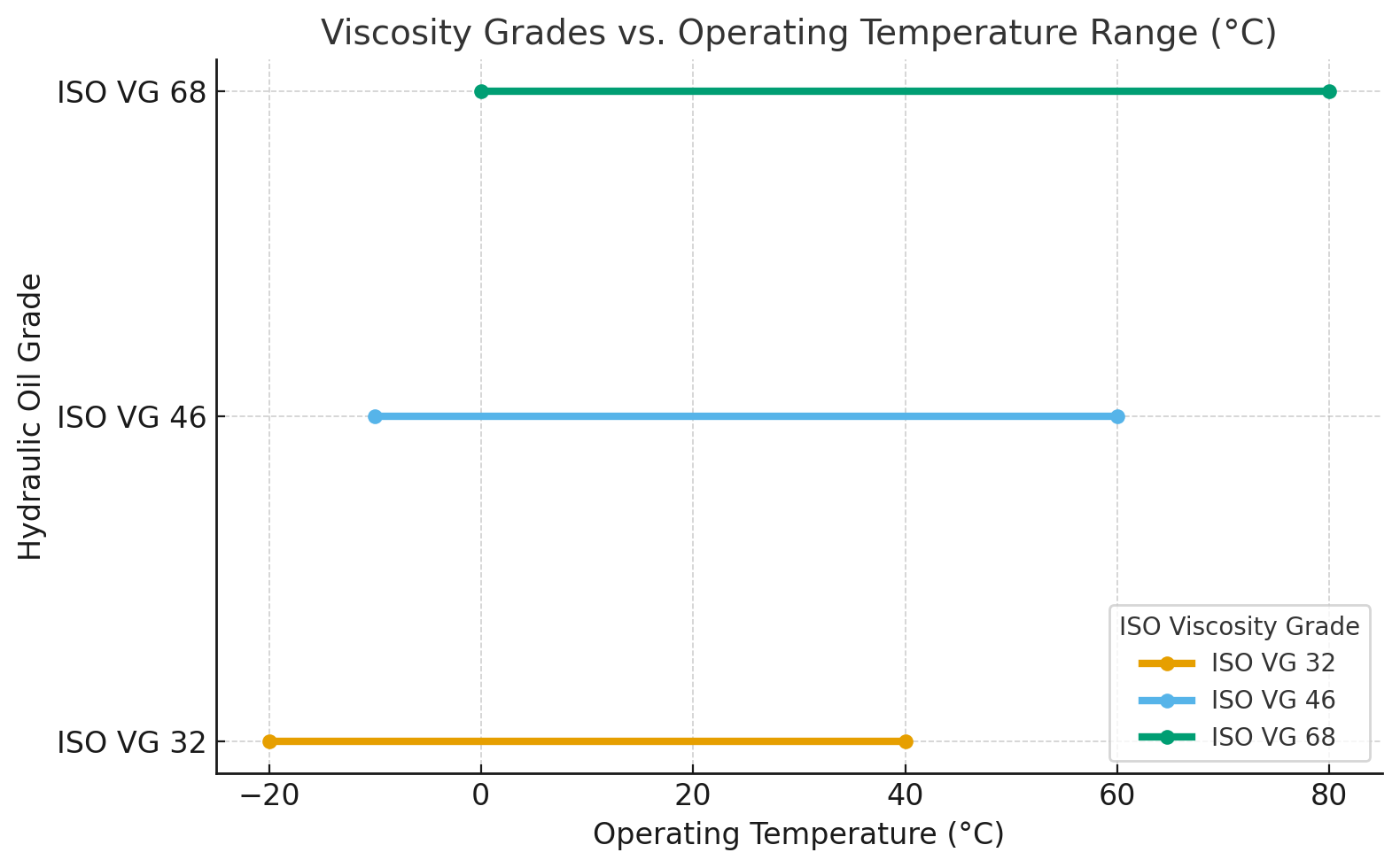
A lower ISO VG number means the oil is thinner. A higher ISO VG number means the oil is thicker. For example, ISO VG 32 is thinner than ISO VG 68.
| Hydraulic oil grade | Viscosity | Typical use |
|---|---|---|
| ISO VG 32 | Thinner hydraulic oil | Cold conditions, lighter-duty systems, and equipment needing easier cold start-up. |
| ISO VG 46 | Medium hydraulic oil | Common general-purpose choice for many industrial and mobile hydraulic systems. |
| ISO VG 68 | Thicker hydraulic oil | Warmer environments, heavier-duty operation, and applications requiring stronger oil film strength. |
Important
Always check the equipment manufacturer’s manual before changing hydraulic oil grade. Using oil that is too thick or too thin can reduce performance and increase wear.
4. How Do I Choose the Right Hydraulic Oil for My Equipment?
Choosing the correct hydraulic oil is critical for performance, efficiency, and the lifespan of your equipment. The wrong oil can cause overheating, poor lubrication, sluggish movement, seal damage, or premature component failure.
- Follow the manufacturer’s manual
Always start with the machine service manual. The manufacturer will usually specify the correct ISO VG grade, oil type, and any required anti-wear or specialist additives. - Match viscosity to operating temperature
In colder environments, a lower-viscosity oil such as ISO VG 32 can help with smoother start-up. In hotter or heavier-duty systems, a higher-viscosity oil such as ISO VG 68 can provide stronger lubrication. - Consider pressure and duty cycle
High-pressure hydraulic systems often require anti-wear hydraulic oil to protect pumps, valves, motors, and cylinders from friction and wear. - Check the working environment
Outdoor, dusty, wet, hot, cold, or environmentally sensitive applications may need a more carefully selected oil type.
Quick tip
If you are unsure which oil to use, check the manufacturer’s recommendation first, then speak to your oil supplier or hydraulic specialist before refilling the system.
5. What Properties Should Good Hydraulic Oil Have?
Not all hydraulic oils are the same. A good hydraulic oil should protect the system, maintain performance across temperature changes, and support long component life.
- Stable viscosity across temperatures
The oil should remain fluid enough for cold starts while also resisting excessive thinning at higher operating temperatures. - Oxidation and thermal stability
Good hydraulic oil resists breakdown from oxygen and heat. This helps reduce sludge, varnish, and oil degradation. - Anti-wear protection
Anti-wear additives help reduce friction between moving parts, protecting pumps, valves, motors, and cylinders. - Corrosion and rust protection
Hydraulic oil should help protect metal components from moisture damage, especially in humid, outdoor, or washdown environments. - Foam resistance and air release
A good oil should resist foaming and release trapped air effectively to reduce noise, cavitation, and erratic operation.
6. How Often Should Hydraulic Oil Be Changed?
Hydraulic oil is often changed every 2,000 to 4,000 operating hours, but the correct interval depends on system design, operating conditions, contamination levels, temperature, and manufacturer guidance.
Condition-based monitoring, such as oil analysis, is usually the most accurate way to decide when hydraulic oil needs replacing. This allows you to monitor contamination, water content, oxidation, viscosity changes, and additive condition.
Best practice
Change hydraulic oil based on both manufacturer recommendations and actual oil condition. A clean, well-maintained system may extend oil life, while hot, dirty, or heavy-duty systems may need more frequent changes.
7. What Are the Signs of Contaminated or Degraded Hydraulic Oil?
Hydraulic oil naturally degrades over time, and contamination is one of the biggest threats to hydraulic system reliability. Recognising the warning signs early can help prevent expensive repairs and downtime.
- Milky or cloudy appearance
This is often caused by water contamination. Moisture reduces lubrication and increases the risk of rust and corrosion. - Dark colour or burnt smell
This can indicate oxidation, overheating, or oil breakdown. The oil may have lost some of its protective qualities. - Sludge, sediment, or particles
Dirt, metal wear particles, or additive breakdown can clog filters and damage pumps, valves, and other components. - Excessive foaming or bubbles
Air contamination can lead to aeration or cavitation, causing noise, vibration, poor response, and reduced efficiency. - Sluggish or noisy system performance
If machinery runs hotter, moves slower, or makes unusual noises, the oil may no longer be protecting the system properly.
Pro tip
Regular visual checks, filter checks, and oil analysis can help catch contamination before it leads to pump, valve, or cylinder damage.
8. Can You Mix Different Hydraulic Oils?
Mixing different hydraulic oils is not recommended unless the manufacturer or oil supplier confirms compatibility. Different formulations may contain different base oils and additive packages, which can react badly when mixed.
Mixing oils can reduce lubrication, affect seal compatibility, create sludge, increase foaming, or reduce the oil’s anti-wear performance. If you need to change to a different hydraulic oil type or grade, a system flush and refill may be required.
Simple rule
Stick with the same hydraulic oil type and grade unless you have confirmed compatibility and followed the correct changeover process.
9. What Problems Can the Wrong Hydraulic Oil Cause?
Using the wrong hydraulic oil may seem like a small mistake, but it can cause serious system issues over time. Hydraulic systems rely on precise fluid properties to operate correctly.
- Increased wear and premature failure
If the oil lacks the correct anti-wear protection, pumps, valves, cylinders, and motors can suffer accelerated damage. - Overheating and reduced efficiency
Oil that is too thick or too thin can create energy losses, heat build-up, and sluggish system performance. - Seal and hose damage
Incompatible oils may cause seals or hoses to swell, shrink, crack, or leak. - Foaming, aeration, or cavitation
Incorrect oil properties can trap air, reduce hydraulic power, create noise, and damage metal surfaces. - Corrosion and sludge formation
Poor oil selection can increase rust risk or encourage sludge build-up, which can block filters and damage sensitive components. - Unexpected downtime and costly repairs
The wrong oil increases maintenance costs and can lead to avoidable breakdowns.
The safest approach is to use the hydraulic oil grade and type recommended by the equipment manufacturer.
10. How Should Hydraulic Oil Be Stored and Disposed of Safely?
Hydraulic oil should be handled carefully before and after use. Good storage helps prevent contamination, while correct disposal protects people, equipment, and the environment.
Storing hydraulic oil safely
- Keep containers sealed
Prevent dirt, water, and air from contaminating the oil. - Store in a clean, dry place
Avoid damp areas, direct sunlight, and extreme temperatures. - Use suitable containers
Store hydraulic oil in approved drums or containers with tight-fitting lids. - Label oil clearly
Mark the oil type, grade, and date received to avoid mix-ups. - Use first in, first out stock rotation
Use older stock before newer stock to reduce the risk of long-term storage degradation.
Disposing of hydraulic oil safely
- Never dump used oil
Do not pour oil down drains, into soil, or into water. - Use approved collection points
Take used oil to licensed recycling or disposal facilities. - Consider recycling
Many waste companies can filter, process, or re-refine used oil. - Wear suitable protection
Avoid prolonged skin contact and use gloves when handling used oil. - Contain spills immediately
Use absorbent pads, granules, or spill kits and dispose of contaminated waste correctly.
11. Why Buy Hydraulic Oil from Flowfit?
Flowfit supplies high-quality hydraulic oil and hydraulic products for a wide range of machinery, maintenance, and engineering applications. Whether you are topping up, replacing old oil, or servicing a hydraulic system, choosing the right fluid helps protect your equipment and reduce downtime.
- Premium hydraulic oil options
Choose from quality hydraulic oils suitable for a wide range of hydraulic equipment. - Hydraulic expertise
Flowfit’s team can help you identify the right hydraulic oil or hydraulic component for your application. - Wide hydraulic product range
Flowfit also supplies pumps, valves, cylinders, hoses, fittings, power units, spill control products, and more. - Free UK shipping over £250
Flowfit offers free UK shipping on eligible orders over £250.
Shop Exol premium hydraulic oil
Browse Flowfit’s range of Exol premium hydraulic oil online and choose the right fluid for your hydraulic equipment.
View hydraulic oil options for maintenance, servicing, and hydraulic system performance.
Ask our hydraulic specialists for help choosing the right oil grade or hydraulic product.
Tip: Before buying hydraulic oil, check your equipment manual for the required ISO VG grade, oil type, additive requirements, and any manufacturer-specific recommendations.
The total one-stop supplier for hydraulic components & systems
Get in touch

Parys Road
Ludlow
Shropshire
SY8 1XY


