


Finding the Perfect Fit: Determining Displacement for Hydraulic Motors
To determine the right displacement for your hydraulic motor, you’ll need a few application details—mainly the torque requirement and the operating pressure. Use the steps below to estimate a suitable displacement and then confirm against manufacturer specifications.
1) Understand displacement
Displacement refers to the volume of hydraulic fluid displaced by the motor in one complete revolution. It’s typically expressed in cubic centimetres (cc) or cubic inches (in³).
What displacement affects
Higher displacement motors generally produce more torque at lower speeds, while lower displacement motors are better suited to higher speeds (assuming the same pressure and flow).
2) Gather the required parameters
- Torque (T): Determine the torque required for your application (Nm or lb-ft).
- Operating pressure (P): Identify the maximum operating pressure of your hydraulic system (bar or psi).
3) Use the formula
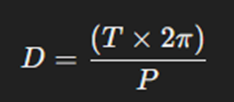
The relationship between torque, pressure, and displacement can be expressed using a standard torque equation. In your notes:
- T = Torque (in Nm)
- P = Pressure (in bar) × 100,000 (to convert to pascals)
- D = Displacement (in m³/rev) or (in cc/rev)
Rearranging the formula to solve for displacement gives you:
Unit tip
Keep units consistent (Nm + bar, or convert to SI units) before calculating. If you’re unsure, ask for help converting units so the result is accurate.
4) Calculate displacement
Plug the values for torque and pressure into the formula to find the required displacement.
5) Consider motor speed
Consider the speed at which the motor will operate. Higher displacement motors can deliver more torque at lower speeds, while lower displacement motors are better suited for higher speeds.
6) Check manufacturer specifications
Review technical specifications provided by motor manufacturers to ensure the selected displacement aligns with your application requirements.
7) Consult with experts
If you are unsure, consulting with hydraulic system experts or manufacturers can help you select the right displacement based on your specific application needs.
Flowfit: a one-stop shop for hydraulic motors
Our selection of hydraulic gear motors is designed to deliver high-quality models tailored to your requirements. With reliable performance and consistent build quality, you can trust that any motor you buy from us will meet—or even surpass—your expectations.
Contact us today to speak with one of our hydraulic specialists and explore your options. You can also shop for hydraulic motors directly through our website.
Need help sizing a hydraulic motor?
Browse hydraulic motors or get in touch with Flowfit to confirm displacement, speed, and pressure requirements for your application.
The total one-stop supplier for hydraulic components & systems
Get in touch

Parys Road
Ludlow
Shropshire
SY8 1XY


