


How to Choose the Right Hydraulic Return Line Filter
Choosing the correct hydraulic return line filter is an important part of keeping hydraulic oil clean and protecting system components from contamination. The filter needs to handle the maximum return flow, provide the required level of filtration and operate without creating excessive back pressure in the return line.
Whether you are replacing an existing return filter or specifying filtration for a new hydraulic system, understanding flow rate, micron rating, filter media, return pressure and connection size will help narrow down the correct specification.
If you already know the specification you require, you can browse our hydraulic return line filter range .
Quick answer
A hydraulic return line filter removes contamination from hydraulic oil as it travels back towards the reservoir. To choose the correct filter, check the maximum return flow, required micron rating, maximum return pressure, port size, filter media and installation type. You should also consider pressure drop, bypass arrangements and whether a clogging indicator is required.
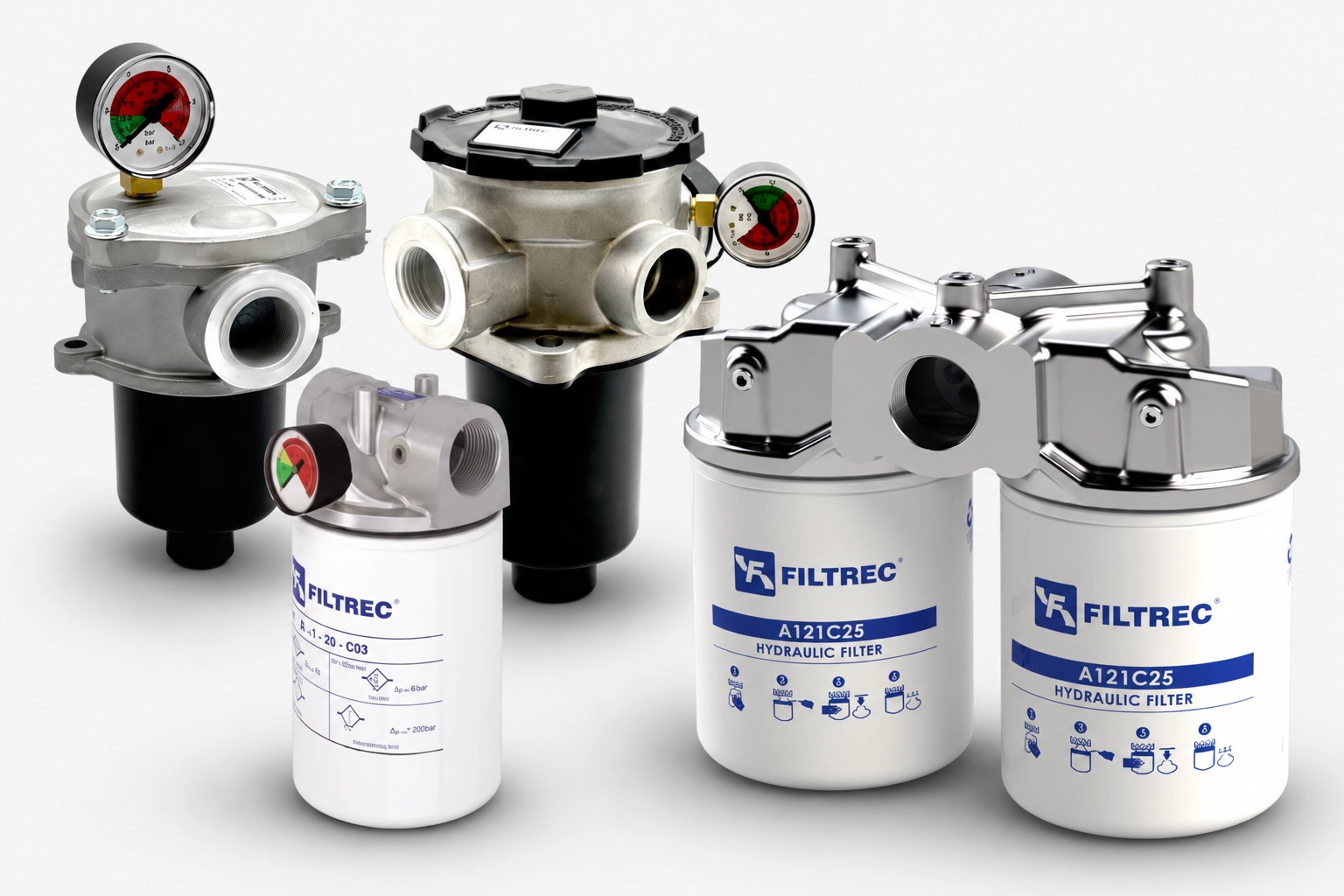
- 1) What is a hydraulic return line filter?
- 2) How does a return line filter work?
- 3) How do I choose the right hydraulic return line filter?
- 4) What flow rate should a return line filter handle?
- 5) What micron rating do I need?
- 6) What is the difference between in-line and tank top return filters?
- 7) What is the difference between a return filter and a pressure filter?
- 8) How do I know if a return line filter is blocked?
- 9) Return line filter selection checklist
- 10) Frequently asked questions
1. What Is a Hydraulic Return Line Filter?
A hydraulic return line filter removes contamination from hydraulic oil before the oil returns to the hydraulic reservoir.
As hydraulic oil circulates through pumps, valves, cylinders, motors, hoses and other components, it can collect dirt, wear particles and other contamination. A return line filter helps capture these particles before the oil enters the tank and begins another cycle through the hydraulic system.
Where does a return line filter sit in a hydraulic system?
A return line filter is normally installed between the working hydraulic components and the reservoir. It filters the oil during the final part of its journey back to the tank.
Return line filters are not high-pressure filters
The return side of a hydraulic system generally operates at a lower pressure than the main pressure line. A return filter should only be used within the pressure conditions for which it has been designed.
2. How Does a Hydraulic Return Line Filter Work?
A return line hydraulic filter works by directing returning hydraulic oil through a filter element before the oil reaches the reservoir.
Contaminated oil enters the filter housing and passes through the filter media. Solid particles are captured by the media while the filtered hydraulic oil continues into the reservoir.
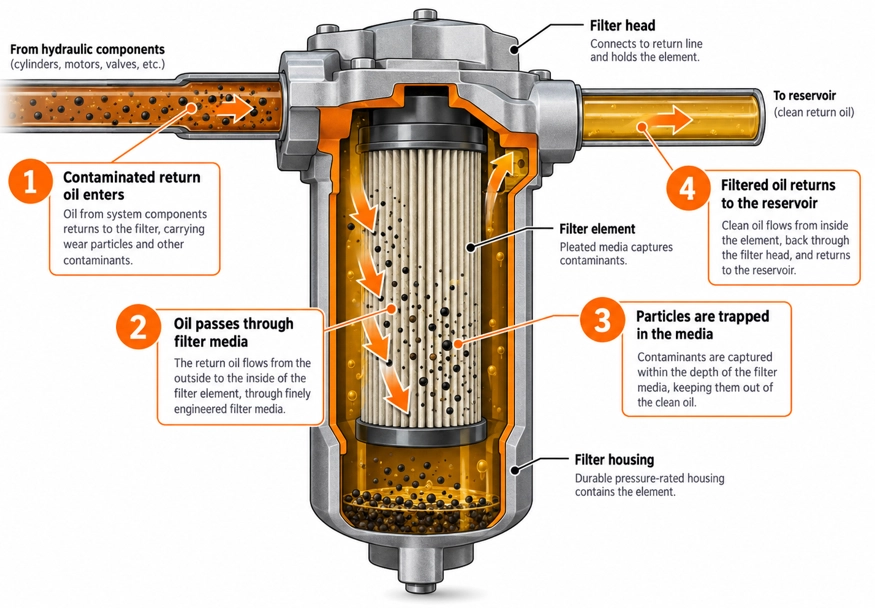
The Four Basic Stages of Return Line Filtration
1. Oil returns from the circuit
Hydraulic oil leaves components such as cylinders, motors and valves and travels towards the reservoir through the return line.
2. Oil enters the return filter
The returning hydraulic oil enters the filter housing before reaching the hydraulic tank.
3. Contamination is captured
The oil passes through the filter media, where dirt, wear particles and other solid contaminants are captured.
4. Filtered oil enters the reservoir
After passing through the filter element, the cleaner hydraulic oil continues into the reservoir ready to circulate through the system again.
Return line filtration in simple terms
Hydraulic oil returns from the circuit → oil enters the return filter → contamination is captured → filtered oil returns to the reservoir.
What Contamination Does a Return Line Filter Remove?
Hydraulic return filters are primarily designed to capture solid contamination suspended within the hydraulic oil.
This can include dirt entering the system from the surrounding environment, metal particles created through component wear, rubber or seal material and debris introduced during servicing or maintenance.
Filtration does not replace good hydraulic maintenance
Effective hydraulic filtration should be combined with clean oil handling, suitable reservoir breathers, correct servicing procedures and regular inspection of the hydraulic system.
3. How Do I Choose the Right Hydraulic Return Line Filter?
Start by establishing the operating conditions of the hydraulic system. The correct return line filter must match several specifications rather than being selected on connection size alone.
Maximum return flow
Establish the highest amount of hydraulic oil that may need to pass through the return filter.
Micron rating
Determine the filtration level required to achieve the desired hydraulic oil cleanliness.
Return pressure
Check that the filter housing is suitable for the maximum pressure that may occur in the hydraulic return line.
Connections
Confirm hydraulic port size, thread type and whether an in-line or reservoir-mounted installation is required.
Other considerations include filter media, hydraulic fluid compatibility, dirt-holding capacity, pressure drop, bypass valve specification, clogging indicators and available installation space.
Do not size a return filter from pump flow alone
The maximum flow returning to the tank can sometimes be higher than the pump's nominal flow. This can occur in circuits containing components such as differential hydraulic cylinders, so the maximum expected return flow should be considered when sizing the filter.
4. What Flow Rate Should a Hydraulic Return Line Filter Handle?
A hydraulic return filter must be able to accommodate the maximum expected return flow travelling towards the reservoir.
Hydraulic flow is normally expressed in litres per minute. When comparing filters, check the manufacturer's flow information for both the filter housing and the selected filter element.
| Flow consideration | Why it matters |
|---|---|
| Normal return flow | Shows the amount of hydraulic oil normally passing through the return filter. |
| Maximum return flow | Helps ensure the filter can accommodate peak operating conditions without excessive restriction. |
| Oil viscosity | More viscous hydraulic oil can create additional resistance through the filter element. |
| Pressure drop | An undersized or heavily contaminated element can increase pressure within the return line. |
Why Can Return Flow Be Higher Than Pump Flow?
In some hydraulic circuits, particularly those containing differential cylinders, the volume of oil leaving the cylinder can exceed the volume being supplied to it by the pump during part of the operating cycle.
This means the return filter may need to handle a higher instantaneous flow rate than the nominal pump output.
Allow for peak return flow
When sizing a hydraulic return filter, establish the maximum possible flow through the return line rather than assuming it will always be identical to the pump flow.
Cold hydraulic oil can increase pressure drop
Hydraulic oil normally becomes more viscous at lower temperatures. Higher viscosity increases resistance through the filter, so operating temperature and oil viscosity may also need to be considered.
5. What Micron Rating Do I Need for a Hydraulic Return Filter?
The micron rating relates to the particle size associated with the filtration performance of the hydraulic filter element.
The correct micron rating depends on the cleanliness requirements of the hydraulic system and the components being protected. There is no single micron rating that is suitable for every application.
| Consideration | Why it matters |
|---|---|
| Component requirements | Pumps, valves, motors and other components may have recommended oil cleanliness requirements. |
| Micron rating | Helps identify the filtration level provided by the hydraulic filter element. |
| Filter efficiency | Filters with a similar stated micron size may not necessarily provide identical filtration performance. |
| Dirt-holding capacity | Influences how much contamination the element can retain before servicing becomes necessary. |
| Pressure drop | Finer filtration can increase resistance to oil flow and should be considered during filter selection. |
A lower micron rating is not automatically better
Return filter selection should balance the required oil cleanliness with flow capacity, pressure drop, filter efficiency and dirt-holding capacity. The filtration level should suit the requirements of the complete hydraulic system.
6. What Is the Difference Between In-Line and Tank Top Return Filters?
Hydraulic return filters are available in several configurations, but two common designs are in-line return filters and tank top return filters.
In-Line Return Filters
An in-line return filter is installed directly within the hydraulic return pipework before the oil reaches the reservoir.
This type of filter can be useful where an external filter installation is preferred or where the existing hydraulic pipework suits an in-line arrangement.
Tank Top Return Filters
A tank top return filter is mounted directly onto the hydraulic reservoir, allowing the returning oil to be filtered as it enters the tank.
Tank-mounted designs can provide a compact installation and convenient access to the filter element during routine maintenance.
Which type should I choose?
The choice between an in-line and tank top return filter depends on the hydraulic system layout, available installation space, reservoir design, required flow capacity and maintenance requirements.
7. What Is the Difference Between a Return Line Filter and a Pressure Filter?
Both types of hydraulic filter remove contamination, but they are installed in different parts of the hydraulic circuit and operate under different pressure conditions.
| Filter type | Typical location | Main consideration |
|---|---|---|
| Return line filter | In the return line before hydraulic oil enters the reservoir. | Must handle the maximum return flow while keeping back pressure within acceptable limits. |
| High-pressure filter | On the pressurised side of the hydraulic circuit, typically downstream of the pump. | The filter housing must be suitable for the high operating pressure within that part of the circuit. |
A pressure filter can provide targeted protection to sensitive downstream components, while return filtration helps remove contamination before the hydraulic oil goes back into the reservoir.
Some hydraulic systems use both pressure and return filtration as part of a wider contamination-control strategy.
Need a filter for the pressure side of the circuit?
Read our guide to choosing the right high-pressure hydraulic filter to learn more about pressure rating, flow rate, micron rating and high-pressure filter selection.
Find a Hydraulic Return Line Filter for Your Application
Once you know the maximum return flow, required filtration level and installation requirements, you can begin comparing suitable hydraulic return filters.
Return line filters
Browse Flowfit's range of hydraulic return filters for industrial, mobile and agricultural hydraulic systems.
Hydraulic filtration
Explore Flowfit's wider hydraulic filtration range for pressure, return and other filtration requirements.
Not sure which return line filter you need?
If you know your maximum return flow, required micron rating, connection size, hydraulic fluid and preferred installation type, the Flowfit team can help identify suitable return filter options.
8. How Do I Know if a Hydraulic Return Line Filter Is Blocked?
As a hydraulic return filter element captures contamination, resistance to oil flow gradually increases.
Some hydraulic return filters use visual or electrical clogging indicators to show when the pressure differential across the filter has reached a specified level.
| Possible sign | What it may indicate |
|---|---|
| Clogging indicator activated | The differential pressure across the return filter element may have increased to the indicator setting. |
| Increasing back pressure | The filter element or another part of the return line may be creating additional restriction. |
| Reduced hydraulic performance | Excessive restriction may be one possible cause, although the complete hydraulic system should be checked. |
| Service interval reached | The filter element may be due for inspection or replacement according to the equipment maintenance schedule. |
What Does a Bypass Valve Do in a Return Filter?
Some hydraulic return filters incorporate a bypass valve. If the pressure differential across the filter element becomes too high, the bypass can allow hydraulic oil to continue flowing.
This can help prevent excessive pressure building in the return line, but oil passing through the bypass may not receive the intended level of filtration.
When Should a Hydraulic Return Filter Element Be Replaced?
There is no single replacement interval suitable for every hydraulic system. Filter element life depends on contamination levels, operating conditions, flow rate, filter capacity, duty cycle and the maintenance requirements of the equipment.
Do not ignore a filter clogging indicator
If the return filter indicator shows that servicing is required, inspect the filtration system and follow the appropriate maintenance procedure rather than continuing to operate indefinitely.
9. What Information Do I Need Before Choosing a Hydraulic Return Line Filter?
Gathering the information below before comparing return filters will make it easier to identify a suitable specification.
| Information to collect | Why it is needed |
|---|---|
| Maximum return flow | Helps determine the required filter size and flow capacity. |
| Maximum return pressure | Helps confirm that the filter housing is suitable for the pressure conditions in the return line. |
| Required micron rating | Helps determine the level of hydraulic filtration required. |
| Filter media | Different element materials can offer different filtration characteristics. |
| Hydraulic fluid | Allows filter media and seal compatibility to be checked. |
| Port size and thread | Ensures the return filter can be connected correctly to the hydraulic system. |
| Installation type | Determines whether an in-line or tank top return filter is more appropriate. |
| Clogging indicator | Determines whether visual or electrical indication is required. |
| Bypass specification | Allows any required bypass arrangement and setting to be considered. |
| Existing filter reference | Can help identify a suitable replacement filter or replacement filter element. |
1. Confirm return flow
Determine the maximum amount of hydraulic oil that may travel through the return line.
2. Select filtration
Identify the required micron rating and filtration performance.
3. Choose installation type
Decide whether an in-line or tank top return filter is more suitable for the hydraulic system.
4. Check remaining specifications
Confirm pressure, ports, filter media, fluid compatibility, indicators, bypass requirements and installation space.
10. Hydraulic Return Line Filter FAQs
What does a hydraulic return line filter do?
A hydraulic return line filter removes solid contamination from hydraulic oil before the oil returns to the reservoir, helping reduce the amount of dirt and wear particles that can circulate through the system again.
Where should a hydraulic return filter be installed?
A return filter is normally installed in the hydraulic return line between the working components and the reservoir. Tank top designs are mounted directly onto the reservoir.
What micron return line filter do I need?
The correct micron rating depends on the required hydraulic oil cleanliness and the requirements of the components within the system. The micron rating should be considered alongside filter efficiency, flow capacity, pressure drop and dirt-holding capacity.
Can a hydraulic return filter cause back pressure?
Yes. Oil experiences resistance as it passes through a hydraulic filter. An undersized filter, highly viscous oil or a contaminated filter element can increase pressure drop and return-line back pressure.
Can a return line filter be too small?
Yes. If the filter cannot handle the maximum return flow, it may create excessive restriction and pressure drop. Return filters should therefore be sized around the maximum expected flow through the return line.
Is return flow always the same as hydraulic pump flow?
No. Some hydraulic circuits can produce return flow greater than the nominal pump flow during parts of the operating cycle. The maximum expected return flow should therefore be established before selecting the filter.
Is a hydraulic return filter the same as a pressure filter?
No. A return filter operates in the return section of the hydraulic circuit before oil reaches the reservoir. A pressure filter is designed for installation in a pressurised hydraulic line and requires a housing suitable for those higher operating pressures.
What is the difference between an in-line and tank top return filter?
An in-line return filter is fitted directly into the hydraulic pipework, while a tank top return filter is mounted onto the hydraulic reservoir and filters the returning oil as it enters the tank.
How often should a hydraulic return filter element be changed?
Replacement frequency depends on contamination levels, operating conditions, filter capacity, flow rate, duty cycle and the maintenance recommendations for the hydraulic equipment. A clogging indicator can also help identify when servicing is required.
Can I replace a return filter with one that has the same port size?
Port size alone is not enough to confirm compatibility. Check maximum flow capacity, pressure rating, micron rating, filter media, thread type, fluid compatibility, bypass specification and installation dimensions.
What information should I provide Flowfit when looking for a replacement return filter?
Where possible, provide the existing filter or filter element reference together with the maximum return flow, micron rating, connection size, hydraulic fluid, filter type and any clogging indicator or bypass requirements.
Choosing the Right Hydraulic Return Line Filter
The correct hydraulic return line filter needs to provide the required level of contamination control while handling the maximum return flow without creating excessive restriction in the hydraulic circuit.
Before ordering, confirm:
- The maximum expected hydraulic return flow
- The maximum return-line pressure
- The required micron rating
- The required filtration performance
- The filter element media
- The hydraulic fluid being used
- The port sizes and thread types
- Whether an in-line or tank top filter is required
- Any clogging indicator requirements
- Any bypass valve requirements
- The available installation space
Learn more about hydraulic filtration
For a broader overview of hydraulic filtration, filter types and Filtrec products, read our hydraulic filtration and Filtrec filters guide .
Find the Right Hydraulic Return Line Filter
Explore Flowfit's range of hydraulic return line filters, including in-line and tank top designs, or contact our team if you need help identifying the correct specification.
Tip: If you are replacing an existing hydraulic return filter, have the filter reference, maximum flow rate, micron rating, connection details and filter type available when contacting the Flowfit technical sales team.
The total one-stop supplier for hydraulic components & systems
Get in touch

Parys Road
Ludlow
Shropshire
SY8 1XY


